{"title":"Novel Thermostable α-Amylase from Bacillus subtilis: Molecular Characterization, Optimization, and Docking-Based Substrate Profiling","authors":"Shazeen Shoaib, Shumaila Naz, Iram Manzoor, Mahjabeen Saleem, Nadia Zeeshan, Muhammad Sajjad","doi":"10.1007/s10930-025-10315-3","DOIUrl":null,"url":null,"abstract":"<div><p>Bacterial alpha-amylases have diverse industrial applications in food, fermentation, and pharmaceuticals. This study focuses on the isolation and characterization of a novel alpha-amylase-producing bacterium through molecular and in silico analyses, including molecular docking to determine enzyme-substrate specificity and binding interactions. Among nine bacterial isolates, S4 demonstrated the highest amylolytic activity of 63.68 U/ml. Molecular identification revealed isolate (S4) identity as <i>Bacillus subtilis</i> (OM278386). Enzyme charcterization revealed that maximum enzyme activity was observed at 40 °C and pH 7.0, after 24 h. The full-length novel alpha-amylase gene from <i>B. subtilis</i> (S4) was amplified, sequenced, and translated into a protein sequence. A putative protein was subjected to BLASTp, phylogenetic analysis, and physicochemical characterization. A 3D model was generated and validated through homology modeling. Molecular docking was performed using six substrates: amylopectin, maltotetraose, glycogen, starch, amylose, and cyclodextrin to determine substrate specificity. The putative AmyE protein comprised 488 amino acids. Phylogenetic analysis confirmed its close association with alpha-amylases of other <i>Bacillus</i> species. The enzymes exhibited industrially desirable traits, including high stability, thermotolerance, and hydrophilicity. In contrast, 3D model investigation showed excellent stereochemical quality, with 95.2% of amino acids in the favored region of the Ramachandran plot. Docking studies revealed the highest affinity for amylopectin (binding energy: – 7.2 kcal/mol). Two essential amino acid residues, Asp and Glu-318, were identified as crucial for active-site substrate interactions and enzyme catalysis across various substrates. In conclusion, the analysis presents alpha-amylase from <i>B. subtilis stain</i> S4 as a promising candidate for diverse industrial applications, offering cost-effective alternatives for starch processing, food preservation, and other biotechnological processes.</p><h3>Graphical abstract</h3><p>Schematic presentation of the study workflow illustrates the screening and isolation of a novel alpha-amylase producing isolate (S4) from soil, followed by molecular identification using 16S rDNA sequence. Full-length novel gene is amplified, sequenced, and translated to protein sequence. The three-dimensional model was validated by homology modelling for subsequent docking and substrate binding affinity analysis. </p><div><figure><div><div><picture><source><img></source></picture><span>The alternative text for this image may have been generated using AI.</span></div></div></figure></div></div>","PeriodicalId":793,"journal":{"name":"The Protein Journal","volume":"45 2","pages":"332 - 348"},"PeriodicalIF":1.9000,"publicationDate":"2026-01-19","publicationTypes":"Journal Article","fieldsOfStudy":null,"isOpenAccess":false,"openAccessPdf":"","citationCount":"0","resultStr":null,"platform":"Semanticscholar","paperid":null,"PeriodicalName":"The Protein Journal","FirstCategoryId":"2","ListUrlMain":"https://link.springer.com/article/10.1007/s10930-025-10315-3","RegionNum":4,"RegionCategory":"生物学","ArticlePicture":[],"TitleCN":null,"AbstractTextCN":null,"PMCID":null,"EPubDate":"","PubModel":"","JCR":"Q4","JCRName":"BIOCHEMISTRY & MOLECULAR BIOLOGY","Score":null,"Total":0}
引用次数: 0
Abstract
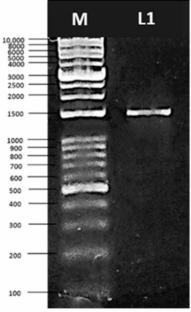
Bacterial alpha-amylases have diverse industrial applications in food, fermentation, and pharmaceuticals. This study focuses on the isolation and characterization of a novel alpha-amylase-producing bacterium through molecular and in silico analyses, including molecular docking to determine enzyme-substrate specificity and binding interactions. Among nine bacterial isolates, S4 demonstrated the highest amylolytic activity of 63.68 U/ml. Molecular identification revealed isolate (S4) identity as Bacillus subtilis (OM278386). Enzyme charcterization revealed that maximum enzyme activity was observed at 40 °C and pH 7.0, after 24 h. The full-length novel alpha-amylase gene from B. subtilis (S4) was amplified, sequenced, and translated into a protein sequence. A putative protein was subjected to BLASTp, phylogenetic analysis, and physicochemical characterization. A 3D model was generated and validated through homology modeling. Molecular docking was performed using six substrates: amylopectin, maltotetraose, glycogen, starch, amylose, and cyclodextrin to determine substrate specificity. The putative AmyE protein comprised 488 amino acids. Phylogenetic analysis confirmed its close association with alpha-amylases of other Bacillus species. The enzymes exhibited industrially desirable traits, including high stability, thermotolerance, and hydrophilicity. In contrast, 3D model investigation showed excellent stereochemical quality, with 95.2% of amino acids in the favored region of the Ramachandran plot. Docking studies revealed the highest affinity for amylopectin (binding energy: – 7.2 kcal/mol). Two essential amino acid residues, Asp and Glu-318, were identified as crucial for active-site substrate interactions and enzyme catalysis across various substrates. In conclusion, the analysis presents alpha-amylase from B. subtilis stain S4 as a promising candidate for diverse industrial applications, offering cost-effective alternatives for starch processing, food preservation, and other biotechnological processes.
Graphical abstract
Schematic presentation of the study workflow illustrates the screening and isolation of a novel alpha-amylase producing isolate (S4) from soil, followed by molecular identification using 16S rDNA sequence. Full-length novel gene is amplified, sequenced, and translated to protein sequence. The three-dimensional model was validated by homology modelling for subsequent docking and substrate binding affinity analysis.
The alternative text for this image may have been generated using AI.
期刊介绍:
The Protein Journal (formerly the Journal of Protein Chemistry) publishes original research work on all aspects of proteins and peptides. These include studies concerned with covalent or three-dimensional structure determination (X-ray, NMR, cryoEM, EPR/ESR, optical methods, etc.), computational aspects of protein structure and function, protein folding and misfolding, assembly, genetics, evolution, proteomics, molecular biology, protein engineering, protein nanotechnology, protein purification and analysis and peptide synthesis, as well as the elucidation and interpretation of the molecular bases of biological activities of proteins and peptides. We accept original research papers, reviews, mini-reviews, hypotheses, opinion papers, and letters to the editor.

 求助内容:
求助内容: 应助结果提醒方式:

 京公网安备 11010802042870号


