{"title":"Effect of Acidification Time on Microstructure and Spontaneous Combustion Characteristics of Anthracite","authors":"Xue Ensi, Li Runzhi","doi":"10.3103/S0361521924601086","DOIUrl":null,"url":null,"abstract":"<p>To investigate the influence of acidification duration on the pore structure and spontaneous combustion characteristics of anthracite, anthracite from the Yixin mining area was selected as the research subject. Hydrofluoric acid was employed for acidification treatments over different time intervals (3, 6, 9, 12 h). Techniques such as X-ray diffraction, temperature-programmed heating, thermogravimetry, and infrared spectroscopy were utilized. The alterations in the microcrystalline structure, gaseous products, thermo-dynamic characteristics, and microstructure of anthracite before and after different acidification durations were compared and analyzed. Moreover, the mechanism by which these changes affect the spontaneous combustion of coal was discussed. The results indicate that after acidification, the interlayer spacing of coal samples gradually increases, while the stacking height and the number of stacking layers generally decrease. As the acidification duration increases, the amount of gaseous products rises, the activation energy declines, and the combustion characteristics improve. Specifically, the activation energies of coal samples A-3, A-6, A-9, and A-12 have decreased by 4.26, 638.86, 222.38, and 249.23 kJ/mol, respectively. During the acidification process, the maximum change in the aliphatic structure of the tested coal sample occurs at 6 h. The content of oxygen-containing functional groups and hydrogen bonds is consistently higher than that in the raw coal. The research findings offer theoretical guidance for the prediction and prevention of spontaneous combustion of pickled coal.</p>","PeriodicalId":779,"journal":{"name":"Solid Fuel Chemistry","volume":"59 6","pages":"512 - 518"},"PeriodicalIF":0.9000,"publicationDate":"2025-12-23","publicationTypes":"Journal Article","fieldsOfStudy":null,"isOpenAccess":false,"openAccessPdf":"","citationCount":"0","resultStr":null,"platform":"Semanticscholar","paperid":null,"PeriodicalName":"Solid Fuel Chemistry","FirstCategoryId":"5","ListUrlMain":"https://link.springer.com/article/10.3103/S0361521924601086","RegionNum":4,"RegionCategory":"工程技术","ArticlePicture":[],"TitleCN":null,"AbstractTextCN":null,"PMCID":null,"EPubDate":"","PubModel":"","JCR":"Q4","JCRName":"CHEMISTRY, MULTIDISCIPLINARY","Score":null,"Total":0}
引用次数: 0
Abstract
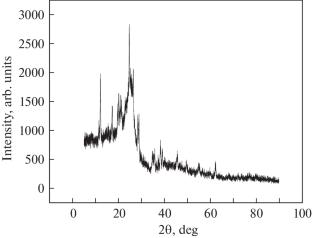
To investigate the influence of acidification duration on the pore structure and spontaneous combustion characteristics of anthracite, anthracite from the Yixin mining area was selected as the research subject. Hydrofluoric acid was employed for acidification treatments over different time intervals (3, 6, 9, 12 h). Techniques such as X-ray diffraction, temperature-programmed heating, thermogravimetry, and infrared spectroscopy were utilized. The alterations in the microcrystalline structure, gaseous products, thermo-dynamic characteristics, and microstructure of anthracite before and after different acidification durations were compared and analyzed. Moreover, the mechanism by which these changes affect the spontaneous combustion of coal was discussed. The results indicate that after acidification, the interlayer spacing of coal samples gradually increases, while the stacking height and the number of stacking layers generally decrease. As the acidification duration increases, the amount of gaseous products rises, the activation energy declines, and the combustion characteristics improve. Specifically, the activation energies of coal samples A-3, A-6, A-9, and A-12 have decreased by 4.26, 638.86, 222.38, and 249.23 kJ/mol, respectively. During the acidification process, the maximum change in the aliphatic structure of the tested coal sample occurs at 6 h. The content of oxygen-containing functional groups and hydrogen bonds is consistently higher than that in the raw coal. The research findings offer theoretical guidance for the prediction and prevention of spontaneous combustion of pickled coal.
期刊介绍:
The journal publishes theoretical and applied articles on the chemistry and physics of solid fuels and carbonaceous materials. It addresses the composition, structure, and properties of solid fuels. The aim of the published articles is to demonstrate how novel discoveries, developments, and theories may be used in improved analysis and design of new types of fuels, chemicals, and by-products. The journal is particularly concerned with technological aspects of various chemical conversion processes and includes papers related to geochemistry, petrology and systematization of fossil fuels, their beneficiation and preparation for processing, the processes themselves, and the ultimate recovery of the liquid or gaseous end products.

 求助内容:
求助内容: 应助结果提醒方式:

 京公网安备 11010802042870号


