Ioasaf Karafotias, Helene Martini, Charlotte V Lee, Terrence T J Hunter, Padmalal Gurugama, Mary Guckian, Rachael Steven, Stephen Jolles, Mark Peakman, David Fear, Mohammad A A Ibrahim
{"title":"CXCL13 as a Biomarker of Complex Common Variable Immunodeficiency.","authors":"Ioasaf Karafotias, Helene Martini, Charlotte V Lee, Terrence T J Hunter, Padmalal Gurugama, Mary Guckian, Rachael Steven, Stephen Jolles, Mark Peakman, David Fear, Mohammad A A Ibrahim","doi":"10.1007/s10875-025-01963-2","DOIUrl":null,"url":null,"abstract":"<p><strong>Background: </strong>Common Variable Immunodeficiency (CVID) is a group of heterogeneous disorders with common denominators of impaired antibody production and function, and recurrent infections. Currently, prognostic biomarkers for CVID are limited. CXCL13 is a critical regulator of germinal centre responses and antibody production, with T follicular helper (Tfh) cells as a major source, and acts as a potent B cell chemoattractant. Serum levels of CXCL13 are increased in chronic inflammatory conditions and malignancy.</p><p><strong>Objectives: </strong>We aimed to explore whether serum CXCL13 levels are altered in CVID and whether they can categorise the patients based on their clinical and immune phenotype.</p><p><strong>Methods: </strong>We compared the serum levels of CXCL13 between CVID and healthy donors (HD) and associated them with the clinical and immune phenotype of the patients.</p><p><strong>Results: </strong>The serum levels of CXCL13 were higher in CVID, especially in female patients, as compared to HD, and were positively correlated with the number of clinical complications in CVID and the total peripheral circulating Tfh cells (cTfh). CVID patients with higher levels of CXCL13 were more likely to have clinical complications and/or high frequency of CD21<sup>low</sup> B cells or low frequency of switched memory B cells.</p><p><strong>Conclusions: </strong>CXCL13 can categorise heterogeneous patients with CVID and be used as a biomarker of complex disease.</p>","PeriodicalId":15531,"journal":{"name":"Journal of Clinical Immunology","volume":"45 1","pages":"168"},"PeriodicalIF":4.1000,"publicationDate":"2025-11-25","publicationTypes":"Journal Article","fieldsOfStudy":null,"isOpenAccess":false,"openAccessPdf":"https://www.ncbi.nlm.nih.gov/pmc/articles/PMC12647345/pdf/","citationCount":"0","resultStr":null,"platform":"Semanticscholar","paperid":null,"PeriodicalName":"Journal of Clinical Immunology","FirstCategoryId":"3","ListUrlMain":"https://doi.org/10.1007/s10875-025-01963-2","RegionNum":2,"RegionCategory":"医学","ArticlePicture":[],"TitleCN":null,"AbstractTextCN":null,"PMCID":null,"EPubDate":"","PubModel":"","JCR":"Q1","JCRName":"IMMUNOLOGY","Score":null,"Total":0}
引用次数: 0
Abstract
Background: Common Variable Immunodeficiency (CVID) is a group of heterogeneous disorders with common denominators of impaired antibody production and function, and recurrent infections. Currently, prognostic biomarkers for CVID are limited. CXCL13 is a critical regulator of germinal centre responses and antibody production, with T follicular helper (Tfh) cells as a major source, and acts as a potent B cell chemoattractant. Serum levels of CXCL13 are increased in chronic inflammatory conditions and malignancy.
Objectives: We aimed to explore whether serum CXCL13 levels are altered in CVID and whether they can categorise the patients based on their clinical and immune phenotype.
Methods: We compared the serum levels of CXCL13 between CVID and healthy donors (HD) and associated them with the clinical and immune phenotype of the patients.
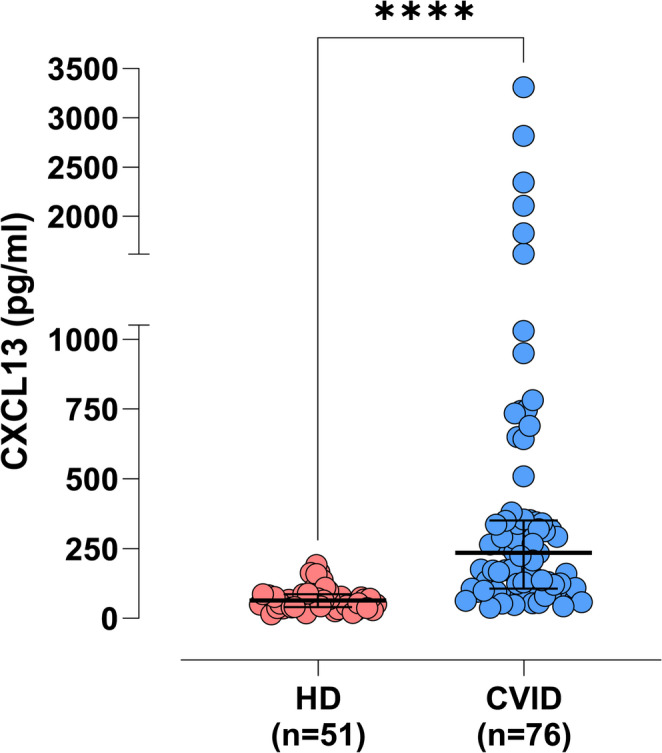
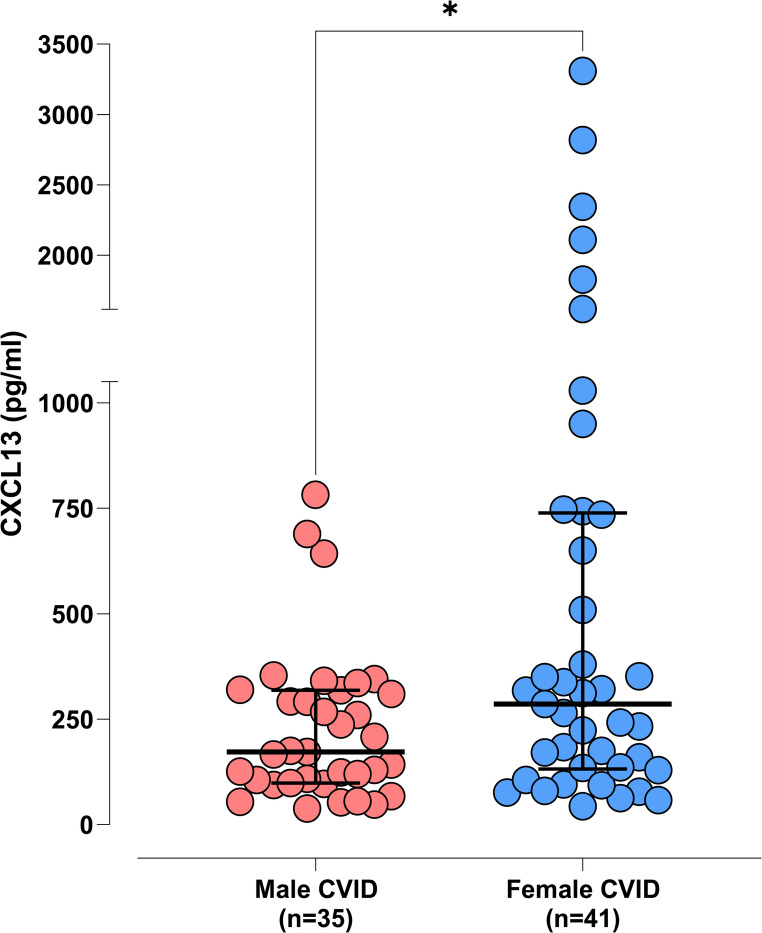
Results: The serum levels of CXCL13 were higher in CVID, especially in female patients, as compared to HD, and were positively correlated with the number of clinical complications in CVID and the total peripheral circulating Tfh cells (cTfh). CVID patients with higher levels of CXCL13 were more likely to have clinical complications and/or high frequency of CD21low B cells or low frequency of switched memory B cells.
Conclusions: CXCL13 can categorise heterogeneous patients with CVID and be used as a biomarker of complex disease.
期刊介绍:
The Journal of Clinical Immunology publishes impactful papers in the realm of human immunology, delving into the diagnosis, pathogenesis, prognosis, or treatment of human diseases. The journal places particular emphasis on primary immunodeficiencies and related diseases, encompassing inborn errors of immunity in a broad sense, their underlying genotypes, and diverse phenotypes. These phenotypes include infection, malignancy, allergy, auto-inflammation, and autoimmunity. We welcome a broad spectrum of studies in this domain, spanning genetic discovery, clinical description, immunologic assessment, diagnostic approaches, prognosis evaluation, and treatment interventions. Case reports are considered if they are genuinely original and accompanied by a concise review of the relevant medical literature, illustrating how the novel case study advances the field. The instructions to authors provide detailed guidance on the four categories of papers accepted by the journal.


 求助内容:
求助内容: 应助结果提醒方式:

 京公网安备 11010802042870号


