
Peiminine modulates T cell-associated gene expression and inflammatory activity in experimental autoimmune hepatitis
IF 3.3
4区 医学
Q2 CELL BIOLOGY
引用次数: 0
Abstract
Autoimmune hepatitis (AIH) is a chronic inflammatory liver disease characterized by immune-mediated hepatocellular injury and insufficient regulatory T cell (Treg) control. Despite the efficacy of corticosteroids and azathioprine, incomplete response, side effects, and relapse often limit treatment, underscoring the need for novel therapeutic strategies. To date, little is known about the potential of natural compounds in modulating T cell–related pathways in AIH.
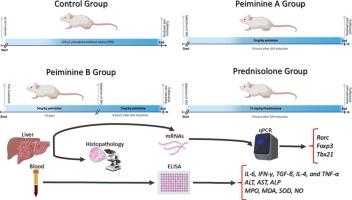
This study aimed to evaluate the therapeutic effects of peiminine, an alkaloid with reported anti-inflammatory and immunomodulatory properties, in an experimental model of AIH. We investigated its impact on liver histopathology, inflammatory markers, and expression of T cell–associated genes (FOXP3, Tbx21, and RORc), comparing its efficacy with prednisolone.
Our results demonstrated that peiminine treatment significantly alleviated interface hepatitis, reduced inflammatory cell infiltration, and improved lobular architecture. Quantitative histological scoring confirmed that peiminine, particularly at higher doses, exerted protective effects comparable to prednisolone. At the molecular level, peiminine increased FOXP3 expression while suppressing Tbx21 and RORc, suggesting restoration of Treg/Th1/Th17 balance. These findings were consistent with reductions in pro-inflammatory cytokine expression and improved liver function indices.
Collectively, our findings provide promising preclinical evidence that peiminine can attenuate autoimmune-mediated liver injury by modulating T cell–associated immune pathways. While further validation in human studies is necessary, these results identify peiminine as a potential adjunct or alternative therapeutic candidate for AIH, with implications for broader autoimmune disease management.
实验性自身免疫性肝炎中贝胺碱调节T细胞相关基因表达和炎症活性。
自身免疫性肝炎(AIH)是一种以免疫介导的肝细胞损伤和调节性T细胞(Treg)控制不足为特征的慢性炎症性肝病。尽管皮质类固醇和硫唑嘌呤有效,但不完全缓解、副作用和复发往往限制了治疗,强调需要新的治疗策略。迄今为止,关于天然化合物在AIH中调节T细胞相关通路的潜力知之甚少。本研究旨在评价贝亚胺(一种具有抗炎和免疫调节特性的生物碱)在AIH实验模型中的治疗效果。我们研究了其对肝脏组织病理学、炎症标志物和T细胞相关基因(FOXP3、Tbx21和RORc)表达的影响,并将其与强的松龙的疗效进行了比较。我们的研究结果表明,培咪明治疗可显著缓解界面肝炎,减少炎症细胞浸润,改善小叶结构。定量组织学评分证实,贝亚明,特别是在高剂量时,具有与强的松龙相当的保护作用。在分子水平上,贝亚胺增加FOXP3的表达,同时抑制Tbx21和RORc,提示Treg/Th1/Th17平衡的恢复。这些发现与促炎细胞因子表达减少和肝功能指数改善一致。总的来说,我们的研究结果提供了有希望的临床前证据,表明贝胺明可以通过调节T细胞相关的免疫途径来减轻自身免疫介导的肝损伤。虽然需要在人体研究中进一步验证,但这些结果确定了贝亚明作为AIH的潜在辅助或替代治疗候选药物,具有更广泛的自身免疫性疾病管理意义。
本文章由计算机程序翻译,如有差异,请以英文原文为准。
求助全文
约1分钟内获得全文
求助全文
来源期刊
Cellular immunology
生物-免疫学
CiteScore
8.20
自引率
2.30%
发文量
102
审稿时长
30 days
期刊介绍:
Cellular Immunology publishes original investigations concerned with the immunological activities of cells in experimental or clinical situations. The scope of the journal encompasses the broad area of in vitro and in vivo studies of cellular immune responses. Purely clinical descriptive studies are not considered.
Research Areas include:
• Antigen receptor sites
• Autoimmunity
• Delayed-type hypersensitivity or cellular immunity
• Immunologic deficiency states and their reconstitution
• Immunologic surveillance and tumor immunity
• Immunomodulation
• Immunotherapy
• Lymphokines and cytokines
• Nonantibody immunity
• Parasite immunology
• Resistance to intracellular microbial and viral infection
• Thymus and lymphocyte immunobiology
• Transplantation immunology
• Tumor immunity.
 求助内容:
求助内容: 应助结果提醒方式:

 京公网安备 11010802042870号


