
A review on soil amendments for cadmium sequestration and methane emission reduction in paddy soils
IF 12.5
1区 环境科学与生态学
Q1 ENVIRONMENTAL SCIENCES
Critical Reviews in Environmental Science and Technology
Pub Date : 2025-12-17
DOI:10.1080/10643389.2025.2572301
引用次数: 0
Abstract
Cadmium (Cd) contamination and methane (CH4) emission from paddy soil are alarming environmental issues that occur simultaneously but are often studied separately, and thus synergistic treatment studies need to be strengthened. This article reviews the involved mechanisms and influencing factors of currently adopted soil amendments for solving the two issues, pinpointing promising amendment materials and environmental conditions for synergistic remediation. The method of application, performances, and mechanisms of currently used soil amendments, including biochar (BC), iron/manganese materials, lime, sulfur, and silicate materials, for mitigating Cd pollution and CH4 emission in paddy soils are demonstrated. The amendments reduce the bioavailability of Cd in soil through various mechanisms including adsorption, complexation, and co-precipitation, and simultaneously, they potentially inhibit CH4 emission by increasing soil redox potential (Eh), enhancing methanotrophy, and reducing the abundance of anaerobic methanogens. Synergistic remediation performance is regulated especially by soil pH and Eh. The most effective pH range for synergistic Cd reduction and CH4 mitigation is between 6.0 and 7.0, with Eh between −150 and −100 mV. However, achieving this promising environmental condition in flooded paddy fields is challenging. Several promising amendment strategies (BC, high-valent Fe/Mn, lime, sulfate, and silicate) are proposed to achieve this goal, identifying research challenges and future directions for in situ remediation of paddy fields.土壤改良剂对水稻土固镉和减少甲烷排放的研究进展
水稻土中镉(Cd)污染和甲烷(CH4)排放是同时发生的令人担忧的环境问题,但往往是分开研究的,因此需要加强协同处理研究。本文综述了目前采用的土壤改良剂所涉及的机制和影响因素,为解决这两个问题指明了有前途的改良剂材料和协同修复的环境条件。介绍了生物炭、铁/锰材料、石灰、硫和硅酸盐材料等土壤改良剂在水稻土中减轻镉污染和CH4排放的应用方法、性能和机理。这些改进剂通过吸附、络合和共沉淀等多种机制降低了土壤中Cd的生物有效性,同时,它们还可能通过增加土壤氧化还原电位(Eh)、促进甲烷化和降低厌氧甲烷菌丰度来抑制CH4的排放。协同修复效果主要受土壤pH和Eh的调节。协同减少Cd和CH4的最有效pH范围为6.0 ~ 7.0,Eh为- 150 ~ - 100 mV。然而,在水田中实现这一有希望的环境条件是具有挑战性的。为了实现这一目标,提出了几种有前途的修复策略(BC、高价Fe/Mn、石灰、硫酸盐和硅酸盐),并确定了稻田原位修复的研究挑战和未来方向。
本文章由计算机程序翻译,如有差异,请以英文原文为准。
求助全文
约1分钟内获得全文
求助全文
来源期刊
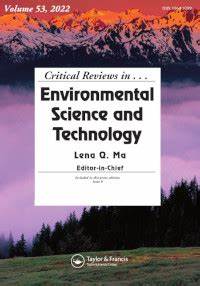
CiteScore
27.30
自引率
1.60%
发文量
64
审稿时长
2 months
期刊介绍:
Two of the most pressing global challenges of our era involve understanding and addressing the multitude of environmental problems we face. In order to tackle them effectively, it is essential to devise logical strategies and methods for their control. Critical Reviews in Environmental Science and Technology serves as a valuable international platform for the comprehensive assessment of current knowledge across a wide range of environmental science topics.
Environmental science is a field that encompasses the intricate and fluid interactions between various scientific disciplines. These include earth and agricultural sciences, chemistry, biology, medicine, and engineering. Furthermore, new disciplines such as environmental toxicology and risk assessment have emerged in response to the increasing complexity of environmental challenges.
The purpose of Critical Reviews in Environmental Science and Technology is to provide a space for critical analysis and evaluation of existing knowledge in environmental science. By doing so, it encourages the advancement of our understanding and the development of effective solutions. This journal plays a crucial role in fostering international cooperation and collaboration in addressing the pressing environmental issues of our time.
 求助内容:
 应助结果提醒方式:


 京公网安备 11010802042870号


