Snigdha Sarkar, Elise M Van Fossen, Xiaolu Li, Tong Zhang, Song Feng, Victoria Prozapas, Ivo Díaz Ludovico, Abdullah D Shouaib, Chelsea M Hutchinson-Bunch, Natalie C Sadler, Isaac K Attah, Wei-Jun Qian, Margaret S Cheung, Pavlo Bohutskyi, John T Melchior
{"title":"Rapid Adaptation of Cyanobacteria to Environmental Perturbations Is Achieved Through Structural Remodeling of the Proteome.","authors":"Snigdha Sarkar, Elise M Van Fossen, Xiaolu Li, Tong Zhang, Song Feng, Victoria Prozapas, Ivo Díaz Ludovico, Abdullah D Shouaib, Chelsea M Hutchinson-Bunch, Natalie C Sadler, Isaac K Attah, Wei-Jun Qian, Margaret S Cheung, Pavlo Bohutskyi, John T Melchior","doi":"10.1016/j.mcpro.2025.101443","DOIUrl":null,"url":null,"abstract":"<p><p>Dynamic environments require cyanobacteria to rapidly respond to fluctuating light conditions on timescales faster than transcription-translation processes allow, which is possible through immediate regulation of protein function via molecular and conformational adjustments. Traditional abundance-based proteomics cannot capture these rapid structural changes, creating a critical gap in understanding cellular adaptation mechanisms. We hypothesized that application of alternative structural proteomics approaches would enable identification of immediate structural remodeling across the cyanobacterial proteome triggered by environmental perturbations, potentially driving functional adaptations invisible to conventional abundance-based methods. We interrogated three complementary techniques-limited proteolysis-based mass spectrometry, thermal proteome profiling, and redox proteomics-for their capacity to unveil structural reorganization within the model cyanobacterium Synechococcus elongatus PCC 7942 during physiologically relevant light transitions. Within 30 min of increased light exposure, we detected structural changes in 753 proteins (limited proteolysis-based mass spectrometry), thermal stability shifts in 600 proteins (thermal proteome profiling), and cysteine oxidation in 1887 sites, while only 145 proteins changed in abundance. All three techniques consistently revealed coordinated remodeling of photosynthetic machinery, ribosomal complexes, and carbon metabolism, exemplified by cytochrome f stabilization modulating electron transport efficiency. Remarkably, <10% of proteins overlapped between methods, demonstrating that each technique captures distinct molecular dimensions of environmental adaptation. This structural proteomics framework demonstrates how alternative techniques can reveal hidden facets of proteome dynamics underlying cellular processes, offering new methodological approaches for understanding environmental responses and informing biotechnological applications.</p>","PeriodicalId":18712,"journal":{"name":"Molecular & Cellular Proteomics","volume":" ","pages":"101443"},"PeriodicalIF":6.3000,"publicationDate":"2026-07-01","publicationTypes":"Journal Article","fieldsOfStudy":null,"isOpenAccess":false,"openAccessPdf":"https://www.ncbi.nlm.nih.gov/pmc/articles/PMC13424402/pdf/","citationCount":"0","resultStr":null,"platform":"Semanticscholar","paperid":null,"PeriodicalName":"Molecular & Cellular Proteomics","FirstCategoryId":"1085","ListUrlMain":"https://doi.org/10.1016/j.mcpro.2025.101443","RegionNum":2,"RegionCategory":"生物学","ArticlePicture":[],"TitleCN":null,"AbstractTextCN":null,"PMCID":null,"EPubDate":"2025/11/3 0:00:00","PubModel":"Epub","JCR":"Q1","JCRName":"BIOCHEMICAL RESEARCH METHODS","Score":null,"Total":0}
引用次数: 0
Abstract
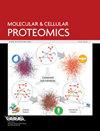
Dynamic environments require cyanobacteria to rapidly respond to fluctuating light conditions on timescales faster than transcription-translation processes allow, which is possible through immediate regulation of protein function via molecular and conformational adjustments. Traditional abundance-based proteomics cannot capture these rapid structural changes, creating a critical gap in understanding cellular adaptation mechanisms. We hypothesized that application of alternative structural proteomics approaches would enable identification of immediate structural remodeling across the cyanobacterial proteome triggered by environmental perturbations, potentially driving functional adaptations invisible to conventional abundance-based methods. We interrogated three complementary techniques-limited proteolysis-based mass spectrometry, thermal proteome profiling, and redox proteomics-for their capacity to unveil structural reorganization within the model cyanobacterium Synechococcus elongatus PCC 7942 during physiologically relevant light transitions. Within 30 min of increased light exposure, we detected structural changes in 753 proteins (limited proteolysis-based mass spectrometry), thermal stability shifts in 600 proteins (thermal proteome profiling), and cysteine oxidation in 1887 sites, while only 145 proteins changed in abundance. All three techniques consistently revealed coordinated remodeling of photosynthetic machinery, ribosomal complexes, and carbon metabolism, exemplified by cytochrome f stabilization modulating electron transport efficiency. Remarkably, <10% of proteins overlapped between methods, demonstrating that each technique captures distinct molecular dimensions of environmental adaptation. This structural proteomics framework demonstrates how alternative techniques can reveal hidden facets of proteome dynamics underlying cellular processes, offering new methodological approaches for understanding environmental responses and informing biotechnological applications.
期刊介绍:
The mission of MCP is to foster the development and applications of proteomics in both basic and translational research. MCP will publish manuscripts that report significant new biological or clinical discoveries underpinned by proteomic observations across all kingdoms of life. Manuscripts must define the biological roles played by the proteins investigated or their mechanisms of action.
The journal also emphasizes articles that describe innovative new computational methods and technological advancements that will enable future discoveries. Manuscripts describing such approaches do not have to include a solution to a biological problem, but must demonstrate that the technology works as described, is reproducible and is appropriate to uncover yet unknown protein/proteome function or properties using relevant model systems or publicly available data.
Scope:
-Fundamental studies in biology, including integrative "omics" studies, that provide mechanistic insights
-Novel experimental and computational technologies
-Proteogenomic data integration and analysis that enable greater understanding of physiology and disease processes
-Pathway and network analyses of signaling that focus on the roles of post-translational modifications
-Studies of proteome dynamics and quality controls, and their roles in disease
-Studies of evolutionary processes effecting proteome dynamics, quality and regulation
-Chemical proteomics, including mechanisms of drug action
-Proteomics of the immune system and antigen presentation/recognition
-Microbiome proteomics, host-microbe and host-pathogen interactions, and their roles in health and disease
-Clinical and translational studies of human diseases
-Metabolomics to understand functional connections between genes, proteins and phenotypes

 求助内容:
 应助结果提醒方式:


 京公网安备 11010802042870号


