Xing-Hua Yue, Zhao-Jun Wang, Mei-Na Wu, Hong-Yan Cai, Jun Zhang
{"title":"[Steroid sulfatase inhibitor DU-14 prevents amyloid β-protein-induced depressive-like behavior and theta rhythm suppression in rats].","authors":"Xing-Hua Yue, Zhao-Jun Wang, Mei-Na Wu, Hong-Yan Cai, Jun Zhang","doi":"10.13294/j.aps.2025.0052","DOIUrl":null,"url":null,"abstract":"<p><p>The hippocampus, a major component of the limbic system, is the most important region related to emotion regulation and memory processing. Cognitive impairment and depressive symptoms observed in Alzheimer's disease (AD) patients may be attributed to hippocampal damage caused by amyloid β-protein (Aβ). Our previous studies have demonstrated that a steroid sulfatase inhibitor DU-14 can enhance hippocampal synaptic plasticity and spatial memory abilities in a chronic AD murine model by counteracting the toxic effects of Aβ. However, limited experimental evidence exists regarding the efficacy of steroid sulfatase inhibitor on depressive symptoms in AD animal models. In this study, we investigated the effects of DU-14 on depressive symptoms and theta-band neuronal oscillations in rats with intrahippocampal injection of Aβ<sub>1-42</sub> using various behavioral tests such as sucrose preference test, tail suspension test, forced swimming test, and <i>in vivo</i> hippocampal local field potential (LFP) recording. The results demonstrated that, in comparison to the control group: (1) rats in the Aβ group exhibited a decrease in sucrose preference, indicating a loss of interest in pleasurable activities; (2) rats in the Aβ group displayed aggravated depressive-like behavior characterized by prolonged immobility time during tail suspension and forced swimming tests; (3) Aβ disrupted the induction of theta rhythm via tail pinch stimulation, and resulted in a significant reduction in peak power of theta rhythm. In contrast to the Aβ group, pretreatment with DU-14 resulted in: (1) a significant improvement in Aβ-induced anhedonia, as evidenced by increased sucrose preference; (2) significant alleviation of Aβ-induced despair and depressive-like behaviors, reflected by reduced immobility time during tail suspension and forced swimming tests; (3) successful mitigation of Aβ-mediated inhibition on bilateral hippocampal theta rhythm. These findings indicate that steroid sulfatase inhibitor DU-14 can counteract neurotoxicity induced by Aβ, and prevent Aβ-induced depressive-like behavior and suppression of theta rhythm.</p>","PeriodicalId":7134,"journal":{"name":"生理学报","volume":"77 5","pages":"801-810"},"PeriodicalIF":0.0000,"publicationDate":"2025-10-25","publicationTypes":"Journal Article","fieldsOfStudy":null,"isOpenAccess":false,"openAccessPdf":"","citationCount":"0","resultStr":null,"platform":"Semanticscholar","paperid":null,"PeriodicalName":"生理学报","FirstCategoryId":"1087","ListUrlMain":"https://doi.org/10.13294/j.aps.2025.0052","RegionNum":0,"RegionCategory":null,"ArticlePicture":[],"TitleCN":null,"AbstractTextCN":null,"PMCID":null,"EPubDate":"","PubModel":"","JCR":"Q3","JCRName":"Medicine","Score":null,"Total":0}
引用次数: 0
Abstract
The hippocampus, a major component of the limbic system, is the most important region related to emotion regulation and memory processing. Cognitive impairment and depressive symptoms observed in Alzheimer's disease (AD) patients may be attributed to hippocampal damage caused by amyloid β-protein (Aβ). Our previous studies have demonstrated that a steroid sulfatase inhibitor DU-14 can enhance hippocampal synaptic plasticity and spatial memory abilities in a chronic AD murine model by counteracting the toxic effects of Aβ. However, limited experimental evidence exists regarding the efficacy of steroid sulfatase inhibitor on depressive symptoms in AD animal models. In this study, we investigated the effects of DU-14 on depressive symptoms and theta-band neuronal oscillations in rats with intrahippocampal injection of Aβ1-42 using various behavioral tests such as sucrose preference test, tail suspension test, forced swimming test, and in vivo hippocampal local field potential (LFP) recording. The results demonstrated that, in comparison to the control group: (1) rats in the Aβ group exhibited a decrease in sucrose preference, indicating a loss of interest in pleasurable activities; (2) rats in the Aβ group displayed aggravated depressive-like behavior characterized by prolonged immobility time during tail suspension and forced swimming tests; (3) Aβ disrupted the induction of theta rhythm via tail pinch stimulation, and resulted in a significant reduction in peak power of theta rhythm. In contrast to the Aβ group, pretreatment with DU-14 resulted in: (1) a significant improvement in Aβ-induced anhedonia, as evidenced by increased sucrose preference; (2) significant alleviation of Aβ-induced despair and depressive-like behaviors, reflected by reduced immobility time during tail suspension and forced swimming tests; (3) successful mitigation of Aβ-mediated inhibition on bilateral hippocampal theta rhythm. These findings indicate that steroid sulfatase inhibitor DU-14 can counteract neurotoxicity induced by Aβ, and prevent Aβ-induced depressive-like behavior and suppression of theta rhythm.
期刊介绍:
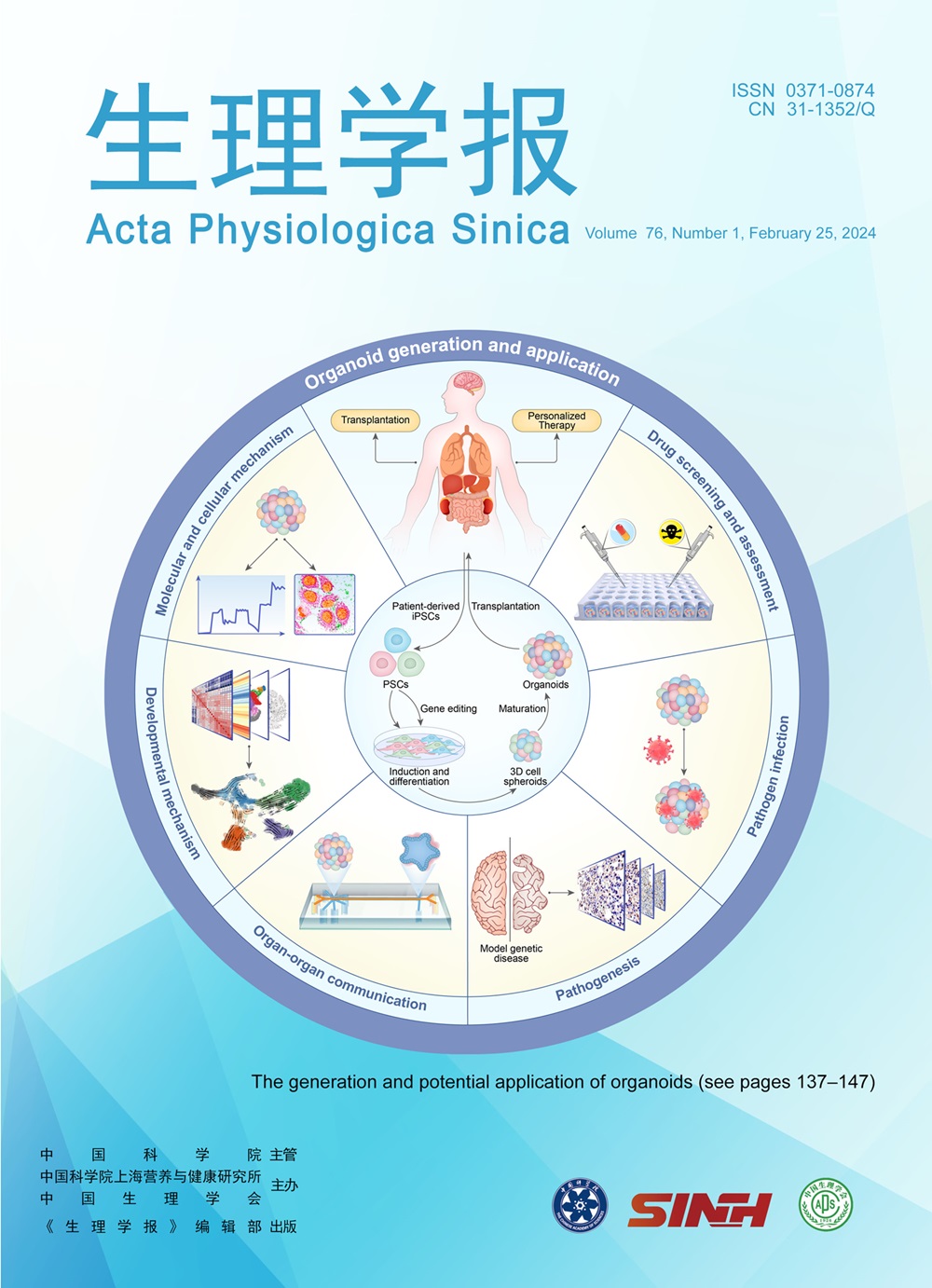
Acta Physiologica Sinica (APS) is sponsored by the Chinese Association for Physiological Sciences and Shanghai Institutes of Biological Sciences, Chinese Academy of Sciences (CAS), and is published bimonthly by the Science Press, China. APS publishes original research articles in the field of physiology as well as research contributions from other biomedical disciplines and proceedings of conferences and symposia of physiological sciences. Besides “Original Research Articles”, the journal also provides columns as “Brief Review”, “Rapid Communication”, “Experimental Technique”, and “Letter to the Editor”. Articles are published in either Chinese or English according to authors’ submission.

 求助内容:
 应助结果提醒方式:


 京公网安备 11010802042870号


