{"title":"[Research progress on the protective effects of heat acclimation on the cardiova-scular system and its molecular mechanisms].","authors":"Guo-Yu Li, Feng Guo, Zhuo Wang, Yue Huang","doi":"10.13294/j.aps.2025.0050","DOIUrl":null,"url":null,"abstract":"<p><p>Heat acclimation provides cardiovascular protection in high-temperature environments through multilevel mechanisms; however, the complete molecular basis of its effects remains unclear. In this paper, we systematically review the effects of heat acclimation on blood volume, vascular function, cardiac structure, energy metabolism, and anti-stress regulation, revealing their potential mechanisms in cardiovascular adaptive protection. We also summarizes the multilevel responses induced by heat stress and heat acclimation, including the modulatory effects of heat acclimation on heat shock proteins (HSPs), hypoxia inducible factor 1 (HIF-1), and apoptotic pathways. Additionally, we highlights the comprehensive protective effects of heat acclimation across various stressors (e.g., hypoxia, heat stress). This review provides a significant physiological basis for cardiovascular disease management and sports medicine, emphasizing the potential application of heat acclimation in response to multiple stressors and supporting its role as an effective tool in cardiovascular health management and stress protection interventions.</p>","PeriodicalId":7134,"journal":{"name":"生理学报","volume":"77 5","pages":"820-838"},"PeriodicalIF":0.0000,"publicationDate":"2025-10-25","publicationTypes":"Journal Article","fieldsOfStudy":null,"isOpenAccess":false,"openAccessPdf":"","citationCount":"0","resultStr":null,"platform":"Semanticscholar","paperid":null,"PeriodicalName":"生理学报","FirstCategoryId":"1087","ListUrlMain":"https://doi.org/10.13294/j.aps.2025.0050","RegionNum":0,"RegionCategory":null,"ArticlePicture":[],"TitleCN":null,"AbstractTextCN":null,"PMCID":null,"EPubDate":"","PubModel":"","JCR":"Q3","JCRName":"Medicine","Score":null,"Total":0}
引用次数: 0
Abstract
Heat acclimation provides cardiovascular protection in high-temperature environments through multilevel mechanisms; however, the complete molecular basis of its effects remains unclear. In this paper, we systematically review the effects of heat acclimation on blood volume, vascular function, cardiac structure, energy metabolism, and anti-stress regulation, revealing their potential mechanisms in cardiovascular adaptive protection. We also summarizes the multilevel responses induced by heat stress and heat acclimation, including the modulatory effects of heat acclimation on heat shock proteins (HSPs), hypoxia inducible factor 1 (HIF-1), and apoptotic pathways. Additionally, we highlights the comprehensive protective effects of heat acclimation across various stressors (e.g., hypoxia, heat stress). This review provides a significant physiological basis for cardiovascular disease management and sports medicine, emphasizing the potential application of heat acclimation in response to multiple stressors and supporting its role as an effective tool in cardiovascular health management and stress protection interventions.
期刊介绍:
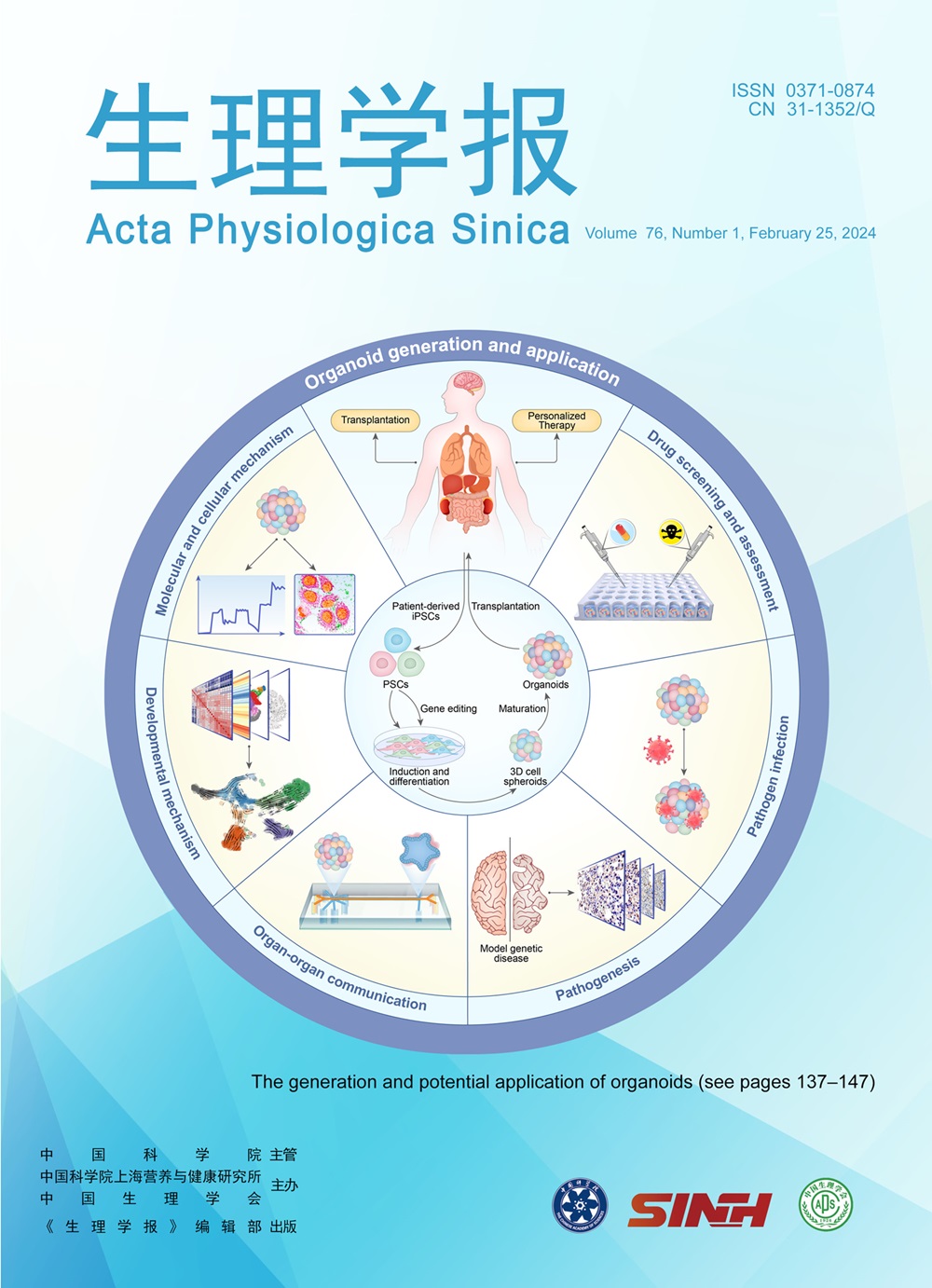
Acta Physiologica Sinica (APS) is sponsored by the Chinese Association for Physiological Sciences and Shanghai Institutes of Biological Sciences, Chinese Academy of Sciences (CAS), and is published bimonthly by the Science Press, China. APS publishes original research articles in the field of physiology as well as research contributions from other biomedical disciplines and proceedings of conferences and symposia of physiological sciences. Besides “Original Research Articles”, the journal also provides columns as “Brief Review”, “Rapid Communication”, “Experimental Technique”, and “Letter to the Editor”. Articles are published in either Chinese or English according to authors’ submission.

 求助内容:
 应助结果提醒方式:


 京公网安备 11010802042870号


