Qian Wang, Yi-Min He, Yu-Mo Dong, Hua-Duo Wu, Yi Zhang, Ning Jiang
{"title":"[Recent advances in the mechanism of insulin-like growth factor-1-mediated exercise-induced improvement of skeletal muscle atrophy].","authors":"Qian Wang, Yi-Min He, Yu-Mo Dong, Hua-Duo Wu, Yi Zhang, Ning Jiang","doi":"10.13294/j.aps.2025.0085","DOIUrl":null,"url":null,"abstract":"<p><p>Skeletal muscle atrophy is characterized by a reduction in both the size and quantity of skeletal muscle fibers, resulting in impaired muscle strength and function. It mainly includes disuse muscle atrophy, aging muscle atrophy, denervated muscle atrophy and muscle atrophy caused by disease <i>etc</i>. As a cost-effective way, exercise has been widely used in the prevention and treatment of skeletal muscle atrophy, but its mechanism for improving skeletal muscle atrophy remains unclear. Recent studies have indicated that insulin-like growth factor 1 (IGF-1) plays an important role in improving muscle atrophy through exercise, in addition to promoting the survival of neurons, lowering blood sugar, and anti-inflammation. This article reviews recent findings on the mechanisms by which IGF-1 mediates exercise-induced improvement in skeletal muscle atrophy, providing a theoretical basis for the prevention and treatment of this disease.</p>","PeriodicalId":7134,"journal":{"name":"生理学报","volume":"77 5","pages":"969-978"},"PeriodicalIF":0.0000,"publicationDate":"2025-10-25","publicationTypes":"Journal Article","fieldsOfStudy":null,"isOpenAccess":false,"openAccessPdf":"","citationCount":"0","resultStr":null,"platform":"Semanticscholar","paperid":null,"PeriodicalName":"生理学报","FirstCategoryId":"1087","ListUrlMain":"https://doi.org/10.13294/j.aps.2025.0085","RegionNum":0,"RegionCategory":null,"ArticlePicture":[],"TitleCN":null,"AbstractTextCN":null,"PMCID":null,"EPubDate":"","PubModel":"","JCR":"Q3","JCRName":"Medicine","Score":null,"Total":0}
引用次数: 0
Abstract
Skeletal muscle atrophy is characterized by a reduction in both the size and quantity of skeletal muscle fibers, resulting in impaired muscle strength and function. It mainly includes disuse muscle atrophy, aging muscle atrophy, denervated muscle atrophy and muscle atrophy caused by disease etc. As a cost-effective way, exercise has been widely used in the prevention and treatment of skeletal muscle atrophy, but its mechanism for improving skeletal muscle atrophy remains unclear. Recent studies have indicated that insulin-like growth factor 1 (IGF-1) plays an important role in improving muscle atrophy through exercise, in addition to promoting the survival of neurons, lowering blood sugar, and anti-inflammation. This article reviews recent findings on the mechanisms by which IGF-1 mediates exercise-induced improvement in skeletal muscle atrophy, providing a theoretical basis for the prevention and treatment of this disease.
期刊介绍:
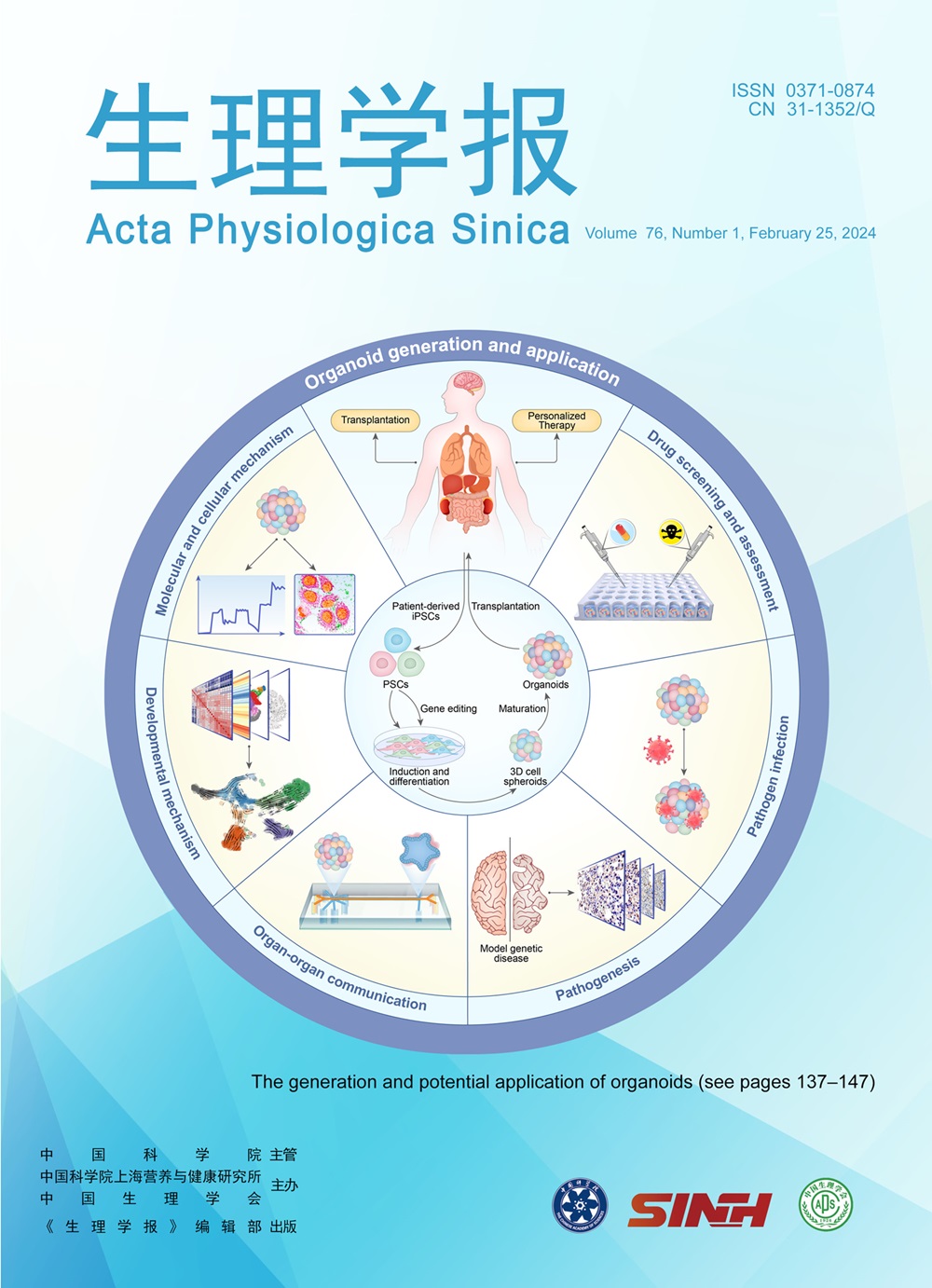
Acta Physiologica Sinica (APS) is sponsored by the Chinese Association for Physiological Sciences and Shanghai Institutes of Biological Sciences, Chinese Academy of Sciences (CAS), and is published bimonthly by the Science Press, China. APS publishes original research articles in the field of physiology as well as research contributions from other biomedical disciplines and proceedings of conferences and symposia of physiological sciences. Besides “Original Research Articles”, the journal also provides columns as “Brief Review”, “Rapid Communication”, “Experimental Technique”, and “Letter to the Editor”. Articles are published in either Chinese or English according to authors’ submission.

 求助内容:
 应助结果提醒方式:


 京公网安备 11010802042870号


