{"title":"SIK2-mediated phosphorylation of GABARAPL2 facilitates autophagosome-lysosome fusion and rescues neurodegeneration in an Alzheimer's disease model.","authors":"Xiaoman Dai, Ziling Ye, Chen Wang, Yufei Huang, Yun Chen, Tianqing Han, Weijie Gao, Xin Wu, Jing Zhang, Xiaochun Chen","doi":"10.1186/s40035-025-00514-4","DOIUrl":null,"url":null,"abstract":"<p><strong>Background: </strong>Defective autophagic flux is implicated in Alzheimer's disease (AD), but the molecular mechanisms underlying this process are not fully understood. Salt-inducible kinase 2 (SIK2) is associated with autophagic function. However, its specific involvement in autophagic flux regulation and AD pathogenesis remains unclear.</p><p><strong>Methods: </strong>We evaluated hippocampal SIK2 expression and its age-related changes in postmortem AD patients and 5 × FAD mice by bioinformatics analysis, immunofluorescence, qPCR, and Western blotting. To investigate the functional role of SIK2, we employed adeno-associated virus-mediated SIK2 knockdown and overexpression in combination with behavioral tests (Morris water maze), electrophysiological recordings (long-term potentiation, LTP), and ultrastructural analysis (electron microscopy) to evaluate cognitive function and synaptic plasticity. Autophagic flux was measured using LC3B/p62 turnover assays, mRFP-GFP-LC3 tandem fluorescence assay, and transmission electron microscopy. Mechanistic insights were gained through co-immunoprecipitation assay, GST-pull down assay, phosphoproteomics, and site-directed mutagenesis. Additionally, phosphorylation-mimetic (S72E) and non-phosphorylatable (S72A) mutants of GABA type A receptor-associated protein-like 2 (GABARAPL2) were intrahippocampally delivered to 5 × FAD mice to explore their effects.</p><p><strong>Results: </strong>Our study identified SIK2 as a critical regulator that is progressively downregulated in hippocampal neurons of AD patients and 5 × FAD mice, correlating with spatial memory deficits. Reducing SIK2 levels exacerbates cognitive impairment and amyloid-β (Aβ) plaque burden in mice, whereas restoring SIK2 levels mitigates these deficits, restores LTP amplitude, reverses synaptic ultrastructural pathology, and reduces Aβ deposition. Mechanistically, SIK2 enhances autophagic flux by phosphorylating GABARAPL2 at Ser72, a modification essential for autophagosome-lysosome fusion. Remarkably, hippocampal delivery of the phosphorylation-mimetic GABARAPL2-S72E mutant replicated the beneficial effects of SIK2, alleviating Aβ pathology and synaptic dysfunction in 5 × FAD mice. In contrast, the non-phosphorylatable S72A mutant failed to show any protective effects.</p><p><strong>Conclusions: </strong>These findings establish the SIK2-GABARAPL2 axis as a novel signaling cascade governing autophagic flux through lysosomal fusion competence. Dysfunction in this axis contributes to Aβ deposition in AD, offering new insights into the pathogenic mechanisms underlying autophagosome-lysosome fusion in AD and highlighting its potential as a therapeutic target.</p>","PeriodicalId":23269,"journal":{"name":"Translational Neurodegeneration","volume":"14 1","pages":"53"},"PeriodicalIF":19.1000,"publicationDate":"2025-10-23","publicationTypes":"Journal Article","fieldsOfStudy":null,"isOpenAccess":false,"openAccessPdf":"https://www.ncbi.nlm.nih.gov/pmc/articles/PMC12548284/pdf/","citationCount":"0","resultStr":null,"platform":"Semanticscholar","paperid":null,"PeriodicalName":"Translational Neurodegeneration","FirstCategoryId":"3","ListUrlMain":"https://doi.org/10.1186/s40035-025-00514-4","RegionNum":1,"RegionCategory":"医学","ArticlePicture":[],"TitleCN":null,"AbstractTextCN":null,"PMCID":null,"EPubDate":"","PubModel":"","JCR":"Q1","JCRName":"NEUROSCIENCES","Score":null,"Total":0}
引用次数: 0
Abstract
Background: Defective autophagic flux is implicated in Alzheimer's disease (AD), but the molecular mechanisms underlying this process are not fully understood. Salt-inducible kinase 2 (SIK2) is associated with autophagic function. However, its specific involvement in autophagic flux regulation and AD pathogenesis remains unclear.
Methods: We evaluated hippocampal SIK2 expression and its age-related changes in postmortem AD patients and 5 × FAD mice by bioinformatics analysis, immunofluorescence, qPCR, and Western blotting. To investigate the functional role of SIK2, we employed adeno-associated virus-mediated SIK2 knockdown and overexpression in combination with behavioral tests (Morris water maze), electrophysiological recordings (long-term potentiation, LTP), and ultrastructural analysis (electron microscopy) to evaluate cognitive function and synaptic plasticity. Autophagic flux was measured using LC3B/p62 turnover assays, mRFP-GFP-LC3 tandem fluorescence assay, and transmission electron microscopy. Mechanistic insights were gained through co-immunoprecipitation assay, GST-pull down assay, phosphoproteomics, and site-directed mutagenesis. Additionally, phosphorylation-mimetic (S72E) and non-phosphorylatable (S72A) mutants of GABA type A receptor-associated protein-like 2 (GABARAPL2) were intrahippocampally delivered to 5 × FAD mice to explore their effects.
Results: Our study identified SIK2 as a critical regulator that is progressively downregulated in hippocampal neurons of AD patients and 5 × FAD mice, correlating with spatial memory deficits. Reducing SIK2 levels exacerbates cognitive impairment and amyloid-β (Aβ) plaque burden in mice, whereas restoring SIK2 levels mitigates these deficits, restores LTP amplitude, reverses synaptic ultrastructural pathology, and reduces Aβ deposition. Mechanistically, SIK2 enhances autophagic flux by phosphorylating GABARAPL2 at Ser72, a modification essential for autophagosome-lysosome fusion. Remarkably, hippocampal delivery of the phosphorylation-mimetic GABARAPL2-S72E mutant replicated the beneficial effects of SIK2, alleviating Aβ pathology and synaptic dysfunction in 5 × FAD mice. In contrast, the non-phosphorylatable S72A mutant failed to show any protective effects.
Conclusions: These findings establish the SIK2-GABARAPL2 axis as a novel signaling cascade governing autophagic flux through lysosomal fusion competence. Dysfunction in this axis contributes to Aβ deposition in AD, offering new insights into the pathogenic mechanisms underlying autophagosome-lysosome fusion in AD and highlighting its potential as a therapeutic target.
期刊介绍:
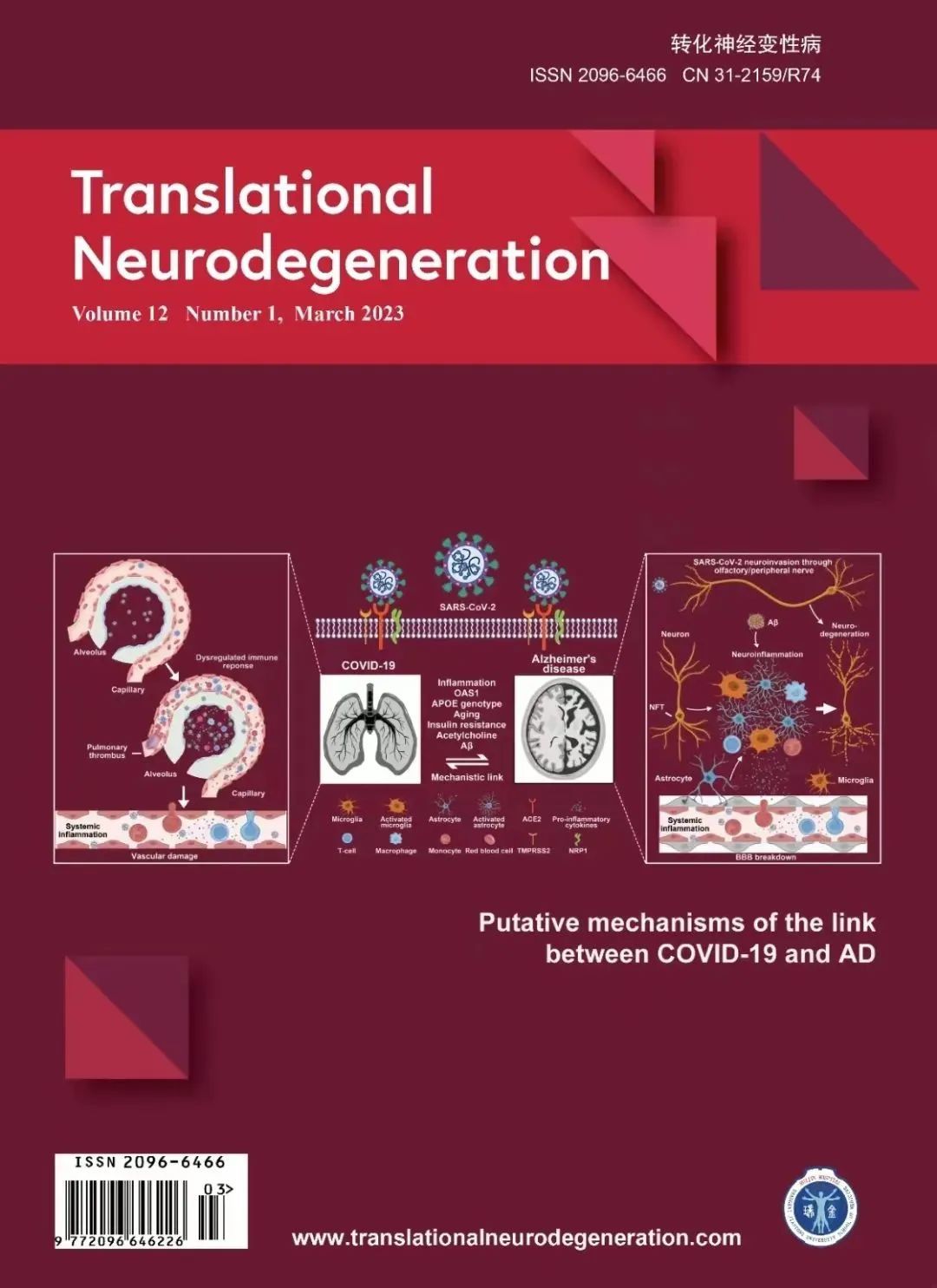
Translational Neurodegeneration, an open-access, peer-reviewed journal, addresses all aspects of neurodegenerative diseases. It serves as a prominent platform for research, therapeutics, and education, fostering discussions and insights across basic, translational, and clinical research domains. Covering Parkinson's disease, Alzheimer's disease, and other neurodegenerative conditions, it welcomes contributions on epidemiology, pathogenesis, diagnosis, prevention, drug development, rehabilitation, and drug delivery. Scientists, clinicians, and physician-scientists are encouraged to share their work in this specialized journal tailored to their fields.

 求助内容:
 应助结果提醒方式:


 京公网安备 11010802042870号


