Effect of comprehensive rehabilitation on pressure pain threshold, functional disability, and plantar pressure among type 2 diabetes mellitus individuals with chronic low back pain.
Shetty Shrija Jaya, Shyamasunder Bhat N, Rajagopal Kadavigere, Belehalli Pavan, Ashu Rastogi, B Ananthakrishna Shastry, Shreemathi S Mayya, G Arun Maiya
{"title":"Effect of comprehensive rehabilitation on pressure pain threshold, functional disability, and plantar pressure among type 2 diabetes mellitus individuals with chronic low back pain.","authors":"Shetty Shrija Jaya, Shyamasunder Bhat N, Rajagopal Kadavigere, Belehalli Pavan, Ashu Rastogi, B Ananthakrishna Shastry, Shreemathi S Mayya, G Arun Maiya","doi":"10.1177/10538127251387831","DOIUrl":null,"url":null,"abstract":"<p><p>BackgroundChronic low back pain(CLBP) is the most prevalent musculoskeletal problem reported by individuals with Type 2 Diabetes Mellitus(T2DM). The effect of therapeutic intervention in this concomitant group of conditions has received limited scholarly attention.ObjectiveTo evaluate the effect of a comprehensive rehabilitation on pressure pain threshold(PPT), functional disability, and plantar pressure in T2DM individuals with CLBP.MethodsIn this study, 40 T2DM individuals with CLBP were included based on the pre-decided eligibility criteria. These participants received a comprehensive rehabilitation consisting of photobiomodulation, pain education, and exercise interventions for 12 weeks. The intervention's effect was evaluated on PPT, disability, and plantar pressure, which were assessed at baseline, the 12<sup>th</sup> week, and the 24<sup>th</sup> week. PPT was evaluated using an algometer. Oswestry disability index(ODI) and Win-Track system were used to assess disability and plantar pressure parameters, respectively.ResultsA statistically significant improvement over the time points was noted in PPT (F<sub>(1.72,67.07)</sub> = 117.9), ODI (F<sub>(1.49,58.19)</sub> = 119), maximal plantar pressure (F<sub>(1.62,63.09)</sub> = 33.01), and average plantar pressure (F<sub>(1.41,55.11)</sub> = 19.87). No significant difference was observed in contact area of bilateral feet across different timepoints.ConclusionA 12-week comprehensive rehabilitation program was effective in improving PPT, functional disability, and plantar pressure in T2DM individuals with CLBP.</p>","PeriodicalId":15129,"journal":{"name":"Journal of Back and Musculoskeletal Rehabilitation","volume":" ","pages":"669-677"},"PeriodicalIF":1.4000,"publicationDate":"2026-03-01","publicationTypes":"Journal Article","fieldsOfStudy":null,"isOpenAccess":false,"openAccessPdf":"https://www.ncbi.nlm.nih.gov/pmc/articles/PMC12967381/pdf/","citationCount":"0","resultStr":null,"platform":"Semanticscholar","paperid":null,"PeriodicalName":"Journal of Back and Musculoskeletal Rehabilitation","FirstCategoryId":"3","ListUrlMain":"https://doi.org/10.1177/10538127251387831","RegionNum":4,"RegionCategory":"医学","ArticlePicture":[],"TitleCN":null,"AbstractTextCN":null,"PMCID":null,"EPubDate":"2025/10/21 0:00:00","PubModel":"Epub","JCR":"Q3","JCRName":"ORTHOPEDICS","Score":null,"Total":0}
引用次数: 0
Abstract
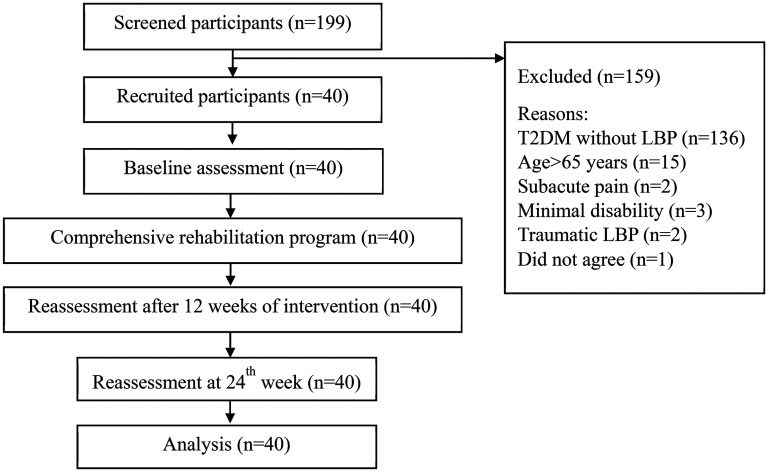
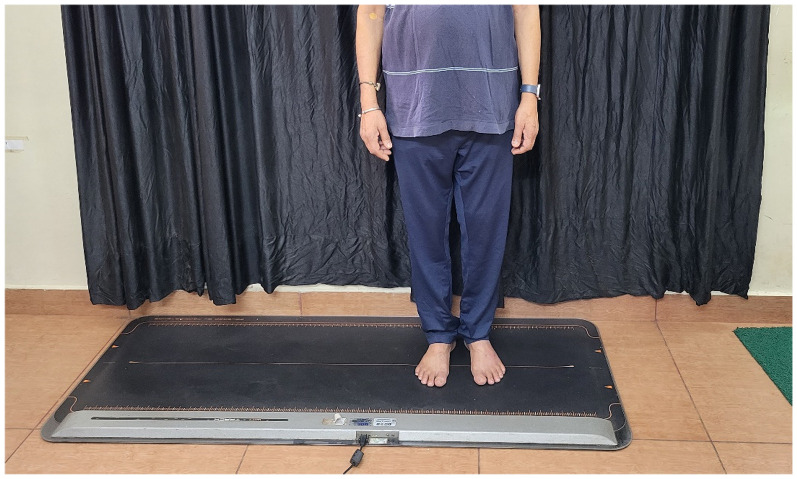
BackgroundChronic low back pain(CLBP) is the most prevalent musculoskeletal problem reported by individuals with Type 2 Diabetes Mellitus(T2DM). The effect of therapeutic intervention in this concomitant group of conditions has received limited scholarly attention.ObjectiveTo evaluate the effect of a comprehensive rehabilitation on pressure pain threshold(PPT), functional disability, and plantar pressure in T2DM individuals with CLBP.MethodsIn this study, 40 T2DM individuals with CLBP were included based on the pre-decided eligibility criteria. These participants received a comprehensive rehabilitation consisting of photobiomodulation, pain education, and exercise interventions for 12 weeks. The intervention's effect was evaluated on PPT, disability, and plantar pressure, which were assessed at baseline, the 12th week, and the 24th week. PPT was evaluated using an algometer. Oswestry disability index(ODI) and Win-Track system were used to assess disability and plantar pressure parameters, respectively.ResultsA statistically significant improvement over the time points was noted in PPT (F(1.72,67.07) = 117.9), ODI (F(1.49,58.19) = 119), maximal plantar pressure (F(1.62,63.09) = 33.01), and average plantar pressure (F(1.41,55.11) = 19.87). No significant difference was observed in contact area of bilateral feet across different timepoints.ConclusionA 12-week comprehensive rehabilitation program was effective in improving PPT, functional disability, and plantar pressure in T2DM individuals with CLBP.
期刊介绍:
The Journal of Back and Musculoskeletal Rehabilitation is a journal whose main focus is to present relevant information about the interdisciplinary approach to musculoskeletal rehabilitation for clinicians who treat patients with back and musculoskeletal pain complaints. It will provide readers with both 1) a general fund of knowledge on the assessment and management of specific problems and 2) new information considered to be state-of-the-art in the field. The intended audience is multidisciplinary as well as multi-specialty.
In each issue clinicians can find information which they can use in their patient setting the very next day.


 求助内容:
求助内容: 应助结果提醒方式:

 京公网安备 11010802042870号


