
Dynamic characteristics of rigid-flexible coupled planetary gear-bearing-rotor system considering the tooth surface lubrication friction and roughness
IF 5.9
1区 工程技术
Q1 ENGINEERING, MECHANICAL
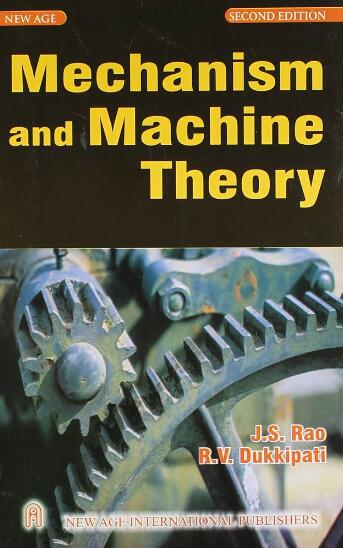
Mechanism and Machine Theory
Pub Date : 2025-12-01
Epub Date: 2025-10-15
DOI:10.1016/j.mechmachtheory.2025.106259
引用次数: 0
Abstract
A novel rigid-flexible coupled planetary gear-bearing-rotor (PBR) dynamic model with bearing-gear coupling effect, modulation of the planetary carrier, roughness, and friction under different lubrication states is established. The necessity of the bearing nonlinear force, the flexible ring and the modulation of the planet carrier in the model is verified through experiments. The improved friction coefficient and the meshing stiffness with lubrication friction are proposed based on elastohydrodynamic lubrication (EHL) and the three-dimensional loaded tooth contact analysis (3D-LTCA) method. The influence of friction under different lubrication conditions on the dynamic characteristics of the PBR system is analyzed. Some interesting phenomena are as follows: friction coefficient of the mixed EHL is greater than that of the EHL at the pitch point. Compared with friction introduced into the stiffness model, the friction introduced into kinematic equations has a greater impact on the PBR system. The low-frequency energy ratio is more sensitive to friction. Meanwhile, compared with the model without friction, friction leads to an increase in the contact force, contact stiffness and contact area of the ball-race, and the dynamic meshing force (DMF).
考虑齿面润滑摩擦和粗糙度的刚柔耦合行星齿轮-轴承-转子系统动态特性
建立了考虑轴承-齿轮耦合效应、行星载子调制、粗糙度和不同润滑状态下摩擦的刚柔耦合行星齿轮-轴承-转子(PBR)动力学模型。通过实验验证了模型中轴承非线性力、柔性环和行星载体调制的必要性。基于弹流动力润滑(EHL)和三维加载齿接触分析(3D-LTCA)方法,提出了润滑摩擦下改进的摩擦系数和啮合刚度。分析了不同润滑条件下摩擦对PBR系统动态特性的影响。一些有趣的现象如下:在俯角处,混合EHL的摩擦系数大于EHL的摩擦系数。与刚度模型中引入的摩擦力相比,运动学方程中引入的摩擦力对PBR系统的影响更大。低频能量比对摩擦更敏感。同时,与无摩擦模型相比,摩擦导致球滚道的接触力、接触刚度和接触面积增大,动态啮合力(DMF)增大。
本文章由计算机程序翻译,如有差异,请以英文原文为准。
求助全文
约1分钟内获得全文
求助全文
来源期刊
Mechanism and Machine Theory
工程技术-工程:机械
CiteScore
9.90
自引率
23.10%
发文量
450
审稿时长
20 days
期刊介绍:
Mechanism and Machine Theory provides a medium of communication between engineers and scientists engaged in research and development within the fields of knowledge embraced by IFToMM, the International Federation for the Promotion of Mechanism and Machine Science, therefore affiliated with IFToMM as its official research journal.
The main topics are:
Design Theory and Methodology;
Haptics and Human-Machine-Interfaces;
Robotics, Mechatronics and Micro-Machines;
Mechanisms, Mechanical Transmissions and Machines;
Kinematics, Dynamics, and Control of Mechanical Systems;
Applications to Bioengineering and Molecular Chemistry
 求助内容:
 应助结果提醒方式:


 京公网安备 11010802042870号


