
Nitric Oxide Regulates Cytochrome P450 2D6 and 3A4 Activity via Concentration-Dependent Modulation of Heme Loading.
IF 4
2区 生物学
Q2 BIOCHEMISTRY & MOLECULAR BIOLOGY
引用次数: 0
Abstract
Cytochrome P450 enzymes (CYP) play diverse roles in human health and disease, and although their activities depend on their heme contents, the cellular mechanisms governing CYP heme levels are unclear. Because CYP activities are influenced by biological nitric oxide (NO), we investigated how a range of NO exposures would impact the heme levels and activities of CYP2D6 and 3A4 expressed in CHO cells and in the human liver cell line HepG2. Following expression, both CYPs were present as a 60:40 mix of heme-free and heme-bound forms. A low range of NO concentrations (approximately 1-10 nM) generated in cultures by a chemical NO donor or by added activated macrophages caused cells to allocate heme into their heme-free CYP3A4 and 2D6 populations such that the levels of heme-replete and active CYPs increased by 2 to 3-fold. NO concentrations above this range (approximately 25-100 nM) gradually lost the positive effect and at the higher level caused heme loss from the CYPs and corresponding losses in activity. The positive or negative effects of NO began within the first 2 h of exposure and completed within 6 h. The NO-driven increase in CYP heme content relied on a GAPDH-heme complex forming and chaperone Hsp90 activity in the cells. Thus, NO can up- or down-regulate cellular CYP3A4 and 2D6 activities by exerting a concentration-dependent change in their heme contents. This may help explain how NO generation in disease or inflammation can change CYP activities and impact drug pharmacokinetics and the generation of immune-active metabolites.一氧化氮通过血红素负荷浓度依赖性调节细胞色素P450 2D6和3A4活性。
细胞色素P450酶(CYP)在人类健康和疾病中发挥着多种作用,尽管它们的活性取决于它们的血红素含量,但控制CYP血红素水平的细胞机制尚不清楚。由于CYP活性受到生物性一氧化氮(NO)的影响,我们研究了一系列NO暴露如何影响CHO细胞和人肝细胞系HepG2中表达的CYP2D6和3A4的血红素水平和活性。表达后,两种CYPs均以无血红素和结合血红素的比例为60:40。化学NO供体或添加活化的巨噬细胞在培养物中产生低范围NO浓度(约1-10 nM),导致细胞将血红素分配到不含血红素的CYP3A4和2D6群体中,从而使血红素充血和活性CYPs的水平增加2至3倍。高于此范围(约25-100 nM)的NO浓度逐渐失去了积极作用,并且在更高的浓度下导致CYPs的血红素损失和相应的活性损失。NO的正面或负面影响在暴露的前2小时内开始,并在6小时内完成。NO驱动的CYP血红素含量的增加依赖于细胞中gapdh -血红素复合物的形成和伴侣Hsp90的活性。因此,NO可以通过施加血红素含量的浓度依赖性变化来上调或下调细胞CYP3A4和2D6的活性。这可能有助于解释疾病或炎症中NO的生成如何改变CYP活性,影响药物药代动力学和免疫活性代谢物的生成。
本文章由计算机程序翻译,如有差异,请以英文原文为准。
求助全文
约1分钟内获得全文
求助全文
来源期刊
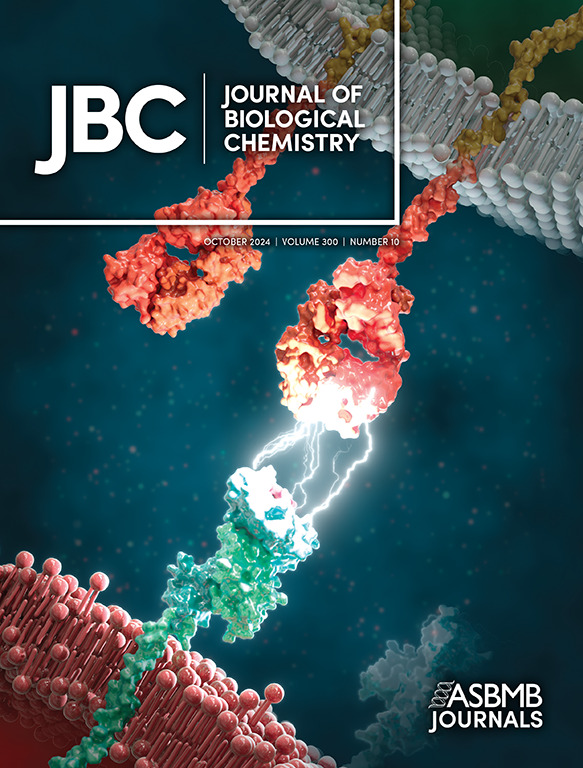
Journal of Biological Chemistry
Biochemistry, Genetics and Molecular Biology-Biochemistry
自引率
4.20%
发文量
1233
期刊介绍:
The Journal of Biological Chemistry welcomes high-quality science that seeks to elucidate the molecular and cellular basis of biological processes. Papers published in JBC can therefore fall under the umbrellas of not only biological chemistry, chemical biology, or biochemistry, but also allied disciplines such as biophysics, systems biology, RNA biology, immunology, microbiology, neurobiology, epigenetics, computational biology, ’omics, and many more. The outcome of our focus on papers that contribute novel and important mechanistic insights, rather than on a particular topic area, is that JBC is truly a melting pot for scientists across disciplines. In addition, JBC welcomes papers that describe methods that will help scientists push their biochemical inquiries forward and resources that will be of use to the research community.
 求助内容:
求助内容: 应助结果提醒方式:

 京公网安备 11010802042870号

