
Genomic insights into milk production, growth, and adaptation traits in Jamunapari goats through whole-genome re-sequencing
IF 1.8
3区 农林科学
Q2 AGRICULTURE, DAIRY & ANIMAL SCIENCE
Small Ruminant Research
Pub Date : 2025-11-01
Epub Date: 2025-08-20
DOI:10.1016/j.smallrumres.2025.107600
引用次数: 0
Abstract
The Jamunapari goat, a prominent indigenous breed of the Indian subcontinent, is highly valued for its superior milk yield, growth performance, and adaptability, playing a crucial role in sustaining rural livelihoods. This study investigated the genomic underpinnings of these economically important traits through whole-genome re-sequencing of 15 unrelated Jamunapari goats from Mathura, Uttar Pradesh. Blood-derived DNA samples were sequenced, aligned to the ARS1 goat reference genome, and analyzed, resulting in the identification of 22,175,381 single nucleotide polymorphisms (SNPs). Selection signatures were detected using intra-population approaches, including nucleotide diversity (π), Composite Likelihood Ratio (CLR), and Runs of Homozygosity (ROH), leading to the identification of 892 candidate genes. Key genes such as VPS13C, COPS3, ABI2, STIM1, GPX1, EP300, CDK4, and RHOA were associated with lactation, growth, and thermotolerance. Functional enrichment analysis using DAVID and KEGG pathways revealed the involvement of critical biological pathways, including Thyroid Hormone, Hippo, and Rap1 signaling, linked to metabolism, tissue development, and environmental resilience. Protein-protein interaction network analysis conducted via STRING and Cytoscape identified 15 hub genes, notably POLR2A, EP300, and CDK4, suggesting their central roles in regulatory networks of adaptation. These findings provide valuable insights into the evolutionary selection and breeding history of the Jamunapari goat, offering a genomic foundation for targeted breeding programs aimed at enhancing productivity and resilience under challenging agro-climatic conditions.
通过全基因组重测序对贾穆纳帕利山羊产奶量、生长和适应性状的基因组学见解
Jamunapari山羊是印度次大陆著名的本土品种,因其优异的产奶量、生长性能和适应性而受到高度重视,在维持农村生计方面发挥着至关重要的作用。本研究通过对来自北方邦马图拉的15只不相关的Jamunapari山羊进行全基因组重测序,调查了这些重要经济性状的基因组基础。对血源性DNA样本进行测序,与山羊ARS1参考基因组比对,并进行分析,鉴定出22175381个单核苷酸多态性(snp)。使用群体内方法检测选择特征,包括核苷酸多样性(π)、复合似然比(CLR)和纯合子运行数(ROH),最终鉴定出892个候选基因。VPS13C、COPS3、ABI2、STIM1、GPX1、EP300、CDK4和RHOA等关键基因与泌乳、生长和耐热性相关。利用DAVID和KEGG通路进行功能富集分析,揭示了包括甲状腺激素、Hippo和Rap1信号在内的关键生物学通路的参与,这些通路与代谢、组织发育和环境恢复能力有关。通过STRING和Cytoscape进行的蛋白-蛋白相互作用网络分析鉴定出15个枢纽基因,特别是POLR2A、EP300和CDK4,表明它们在适应调节网络中起核心作用。这些发现为了解Jamunapari山羊的进化选择和繁殖历史提供了有价值的见解,为有针对性的育种计划提供了基因组基础,旨在提高具有挑战性的农业气候条件下的生产力和适应能力。
本文章由计算机程序翻译,如有差异,请以英文原文为准。
求助全文
约1分钟内获得全文
求助全文
来源期刊
Small Ruminant Research
农林科学-奶制品与动物科学
CiteScore
3.10
自引率
11.10%
发文量
210
审稿时长
12.5 weeks
期刊介绍:
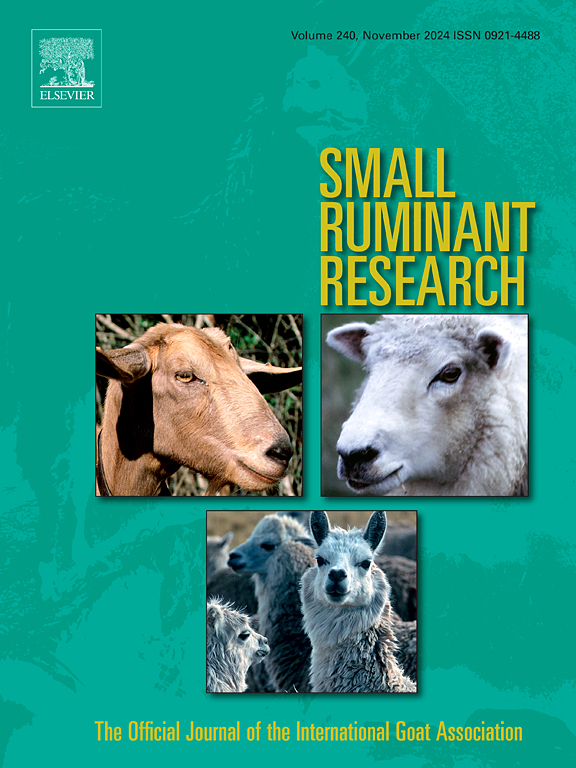
Small Ruminant Research publishes original, basic and applied research articles, technical notes, and review articles on research relating to goats, sheep, deer, the New World camelids llama, alpaca, vicuna and guanaco, and the Old World camels.
Topics covered include nutrition, physiology, anatomy, genetics, microbiology, ethology, product technology, socio-economics, management, sustainability and environment, veterinary medicine and husbandry engineering.
 求助内容:
 应助结果提醒方式:


 京公网安备 11010802042870号


