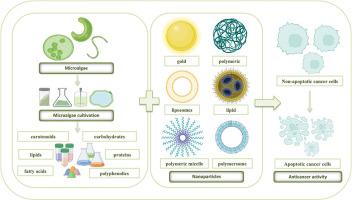
微藻衍生的生物分子和纳米颗粒缀合物:癌症治疗的新兴治疗平台

Q2 Pharmacology, Toxicology and Pharmaceutics
OpenNano Pub Date : 2026-03-01 Epub Date: 2026-02-23 DOI:10.1016/j.onano.2026.100291
Ozge Cinar, Ilgin Kimiz-Gebologlu, Sevval Kurt, Suphi S. Oncel
{"title":"微藻衍生的生物分子和纳米颗粒缀合物:癌症治疗的新兴治疗平台","authors":"Ozge Cinar,&nbsp;Ilgin Kimiz-Gebologlu,&nbsp;Sevval Kurt,&nbsp;Suphi S. Oncel","doi":"10.1016/j.onano.2026.100291","DOIUrl":null,"url":null,"abstract":"<div><div>Nanoparticle-based drug delivery systems have the potential to provide a promising platform for overcoming the limitations of therapeutics in cancer treatment, thanks to advantages such as controlled release, tumor targeting, and reduced systemic toxicity. In parallel, microalgal biomolecules possess strong antioxidant and antiproliferative properties. However, these biomolecules are therapeutically limited due to their low stability and restricted bioavailability. The approach of using microalgal compounds in combination with nanoparticles both improves their pharmacokinetic properties and enhances multiple anticancer mechanisms (ROS modulation, caspase activation, etc.). This review focuses on the anticancer potential of microalgal biomolecules and nanoparticulate systems, the intracellular mechanisms of action of the conjugated platforms they form, and their biocompatibility advantages. It also describes the potential of conjugated platforms for future clinical applications, highlighting their importance as biologically synergistic and targeted next-generation therapeutic platforms in cancer treatment.</div></div>","PeriodicalId":37785,"journal":{"name":"OpenNano","volume":"28 ","pages":"Article 100291"},"PeriodicalIF":0.0000,"publicationDate":"2026-03-01","publicationTypes":"Journal Article","fieldsOfStudy":null,"isOpenAccess":false,"openAccessPdf":"","citationCount":"0","resultStr":"{\"title\":\"Microalgae-derived biomolecule and nanoparticle conjugates: Emerging therapeutic platforms for cancer treatment\",\"authors\":\"Ozge Cinar,&nbsp;Ilgin Kimiz-Gebologlu,&nbsp;Sevval Kurt,&nbsp;Suphi S. Oncel\",\"doi\":\"10.1016/j.onano.2026.100291\",\"DOIUrl\":null,\"url\":null,\"abstract\":\"<div><div>Nanoparticle-based drug delivery systems have the potential to provide a promising platform for overcoming the limitations of therapeutics in cancer treatment, thanks to advantages such as controlled release, tumor targeting, and reduced systemic toxicity. In parallel, microalgal biomolecules possess strong antioxidant and antiproliferative properties. However, these biomolecules are therapeutically limited due to their low stability and restricted bioavailability. The approach of using microalgal compounds in combination with nanoparticles both improves their pharmacokinetic properties and enhances multiple anticancer mechanisms (ROS modulation, caspase activation, etc.). This review focuses on the anticancer potential of microalgal biomolecules and nanoparticulate systems, the intracellular mechanisms of action of the conjugated platforms they form, and their biocompatibility advantages. It also describes the potential of conjugated platforms for future clinical applications, highlighting their importance as biologically synergistic and targeted next-generation therapeutic platforms in cancer treatment.</div></div>\",\"PeriodicalId\":37785,\"journal\":{\"name\":\"OpenNano\",\"volume\":\"28 \",\"pages\":\"Article 100291\"},\"PeriodicalIF\":0.0000,\"publicationDate\":\"2026-03-01\",\"publicationTypes\":\"Journal Article\",\"fieldsOfStudy\":null,\"isOpenAccess\":false,\"openAccessPdf\":\"\",\"citationCount\":\"0\",\"resultStr\":null,\"platform\":\"Semanticscholar\",\"paperid\":null,\"PeriodicalName\":\"OpenNano\",\"FirstCategoryId\":\"1085\",\"ListUrlMain\":\"https://www.sciencedirect.com/science/article/pii/S2352952026000113\",\"RegionNum\":0,\"RegionCategory\":null,\"ArticlePicture\":[],\"TitleCN\":null,\"AbstractTextCN\":null,\"PMCID\":null,\"EPubDate\":\"2026/2/23 0:00:00\",\"PubModel\":\"Epub\",\"JCR\":\"Q2\",\"JCRName\":\"Pharmacology, Toxicology and Pharmaceutics\",\"Score\":null,\"Total\":0}","platform":"Semanticscholar","paperid":null,"PeriodicalName":"OpenNano","FirstCategoryId":"1085","ListUrlMain":"https://www.sciencedirect.com/science/article/pii/S2352952026000113","RegionNum":0,"RegionCategory":null,"ArticlePicture":[],"TitleCN":null,"AbstractTextCN":null,"PMCID":null,"EPubDate":"2026/2/23 0:00:00","PubModel":"Epub","JCR":"Q2","JCRName":"Pharmacology, Toxicology and Pharmaceutics","Score":null,"Total":0}
引用次数: 0

摘要

纳米颗粒为基础的药物传递系统有潜力为克服癌症治疗方法的局限性提供一个有前途的平台,这要感谢诸如控制释放、肿瘤靶向和降低全身毒性等优点。同时,微藻生物分子具有很强的抗氧化和抗增殖特性。然而,这些生物分子由于其低稳定性和有限的生物利用度而在治疗上受到限制。微藻化合物与纳米颗粒联合使用的方法既改善了它们的药代动力学性质,又增强了多种抗癌机制(ROS调节、caspase激活等)。本文综述了微藻生物分子和纳米颗粒系统的抗癌潜力,它们形成的共轭平台的细胞内作用机制,以及它们的生物相容性优势。它还描述了缀合平台在未来临床应用中的潜力,强调了它们在癌症治疗中作为生物协同和靶向的下一代治疗平台的重要性。
本文章由计算机程序翻译,如有差异,请以英文原文为准。

Microalgae-derived biomolecule and nanoparticle conjugates: Emerging therapeutic platforms for cancer treatment

Microalgae-derived biomolecule and nanoparticle conjugates: Emerging therapeutic platforms for cancer treatment
Nanoparticle-based drug delivery systems have the potential to provide a promising platform for overcoming the limitations of therapeutics in cancer treatment, thanks to advantages such as controlled release, tumor targeting, and reduced systemic toxicity. In parallel, microalgal biomolecules possess strong antioxidant and antiproliferative properties. However, these biomolecules are therapeutically limited due to their low stability and restricted bioavailability. The approach of using microalgal compounds in combination with nanoparticles both improves their pharmacokinetic properties and enhances multiple anticancer mechanisms (ROS modulation, caspase activation, etc.). This review focuses on the anticancer potential of microalgal biomolecules and nanoparticulate systems, the intracellular mechanisms of action of the conjugated platforms they form, and their biocompatibility advantages. It also describes the potential of conjugated platforms for future clinical applications, highlighting their importance as biologically synergistic and targeted next-generation therapeutic platforms in cancer treatment.
求助全文
通过发布文献求助,成功后即可免费获取论文全文。 去求助
来源期刊
OpenNano
OpenNano Medicine-Pharmacology (medical)
CiteScore
4.10
自引率
0.00%
发文量
63
审稿时长
50 days
期刊介绍: OpenNano is an internationally peer-reviewed and open access journal publishing high-quality review articles and original research papers on the burgeoning area of nanopharmaceutics and nanosized delivery systems for drugs, genes, and imaging agents. The Journal publishes basic, translational and clinical research as well as methodological papers and aims to bring together chemists, biochemists, cell biologists, material scientists, pharmaceutical scientists, pharmacologists, clinicians and all others working in this exciting and challenging area.

×
引用
GB/T 7714-2015
复制
MLA
复制
APA
复制
导出至
BibTeX EndNote RefMan NoteFirst NoteExpress
×
提示
您的信息不完整,为了账户安全,请先补充。
现在去补充
×
提示
您因"违规操作"
具体请查看互助需知
我知道了
×
提示
确定
请完成安全验证×
copy
已复制链接
快去分享给好友吧!
我知道了
右上角分享
点击右上角分享
0
联系我们:info@booksci.cn Book学术提供免费学术资源搜索服务,方便国内外学者检索中英文文献。致力于提供最便捷和优质的服务体验。 Copyright © 2023 布克学术 All rights reserved.
京ICP备2023020795号-1
ghs 京公网安备 11010802042870号
Book学术文献互助
Book学术文献互助群
群 号:604180095
Book学术官方微信
小红书